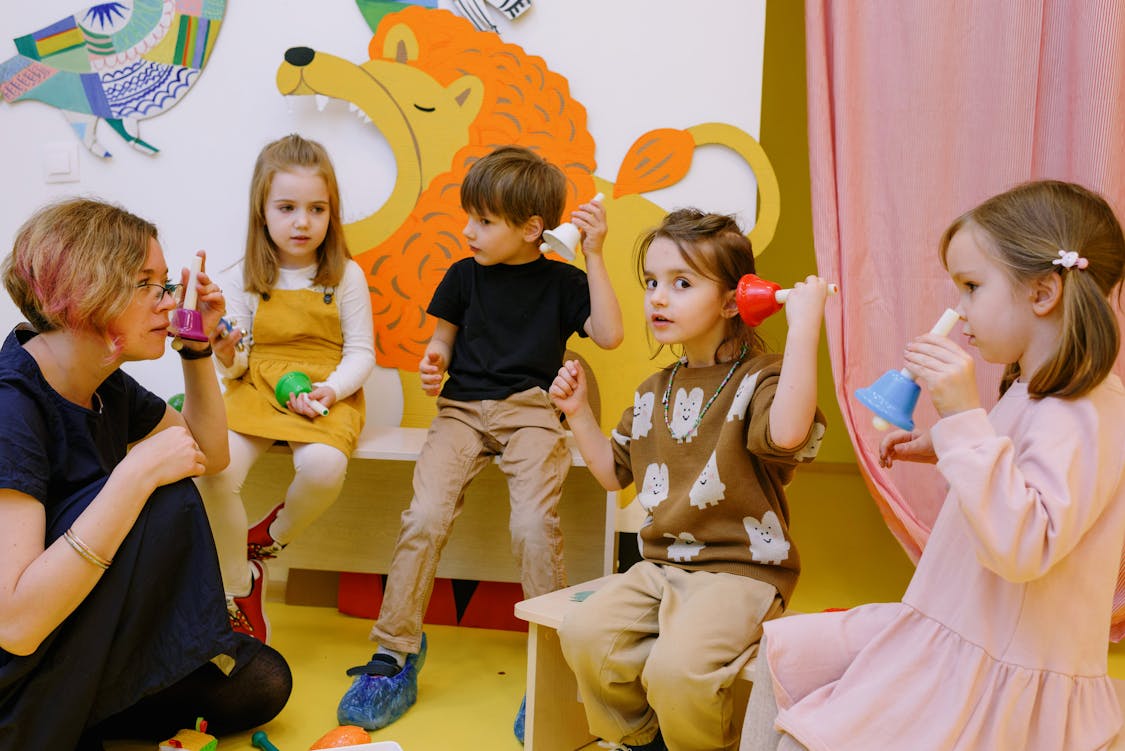
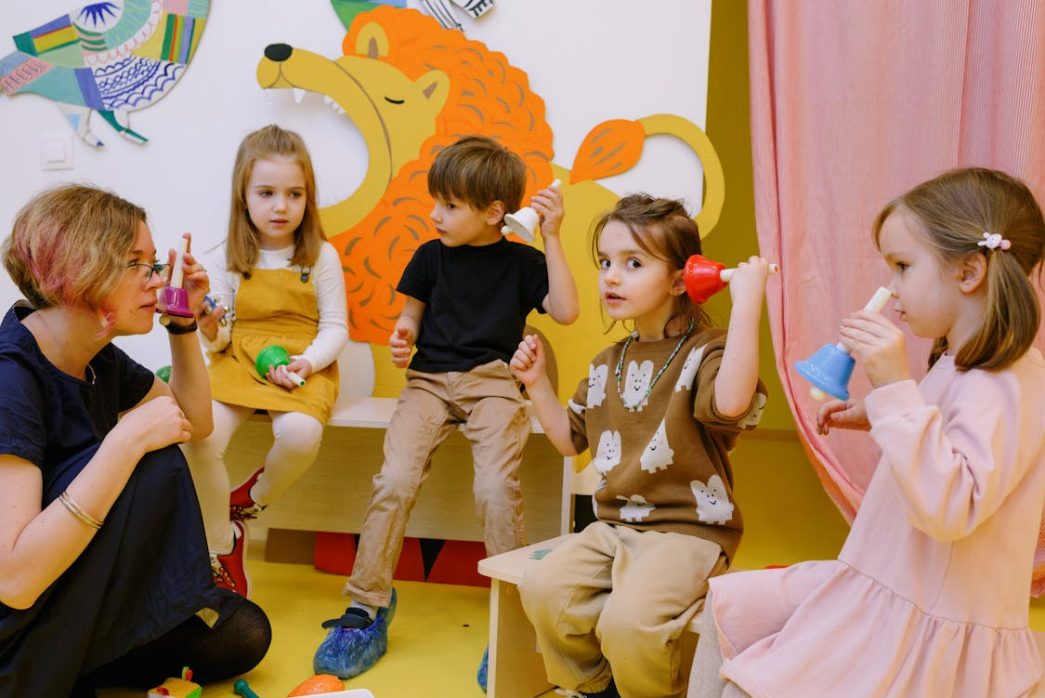
Social play in child care settings offers a steady stream of learning moments that feel like fun rather than formal lessons, and children soak up language, rules and rhythm in natural ways.
When kids play together they try on roles, test limits and practice small acts of cooperation that add up into real skills over weeks and months.
Thoughtful adults who join or observe can guide with a light touch, stepping in to name feelings or to offer a suggestion that moves a scene forward without stealing the spotlight. 
Below are five key benefits that show how everyday play supports growth across a range of domains and gives caregivers clear signs to celebrate.
1. Enhanced Language And Communication Skills
Social play creates frequent chances for children to use words, gestures and facial cues in a low pressure setting where peers mirror and expand on utterances, which feeds vocabulary growth and speech confidence.
When children pretend, take turns and narrate actions they practice sentence forms, experiment with tone and rhythm, and build listening habits that matter for later literacy.
Care providers who join the action can model richer language and offer fresh words without interrupting the flow of play, and gentle cues from adults spark curiosity and invite new phrases into the conversation.
Little achievements such as a toddler naming a toy or a preschooler giving directions bring smiles and invite more back and forth talk that deepens communicative skill.
Peer negotiation during play pushes children to clarify ideas and listen closely, and those exchanges teach pragmatic language use in living context rather than in abstract drills.
Short routines like singing a rhyme or trading lines in dramatic play build memory and pattern awareness while letting children rehearse predictable sequences that ease into more complex conversation.
The playful context lowers anxiety about mistakes and makes trial and error part of natural discovery, giving adults chances to praise effort and model new phrases in a relaxed way.
Small dialogues at cleanup or snack time are prime opportunities to extend vocabulary through concrete actions and repeated exposure with friendly voices guiding the way.
2. Social Emotional Development
Social play helps children practice waiting, sharing and reading emotions as they act out scenes with peers and learn to register another view without heavy pressure.
They learn to take turns and to cope with disappointment when a plan shifts or someone takes the lead, and those moments cultivate resilience through repeated, manageable setbacks that do not overwhelm.
When caregivers step in with calm words they help name feelings and show simple strategies to calm down, which builds verbal self regulation skills that carry beyond the play area.
Play provides a safe stage to try on roles and safe risk, helping children test boundaries and form a sense of self in relation to others.
Group games, whether simple circle activities or dramatic scenes, require children to notice cues like tone and body language and react in ways that strengthen empathy and trust as relationships grow.
Resolving small disagreements over rules or roles teaches fairness and respect while giving kids practice at weighing another person s needs against their own.
Positive reactions from peers act like a mirror, reflecting social choices and helping children tune behavior in future interactions without long lectures.
A steady caregiver who validates feelings and models calm responses adds a reliable anchor that helps youngsters move through big emotions with fewer tears and quicker recovery.
3. Problem Solving And Conflict Resolution
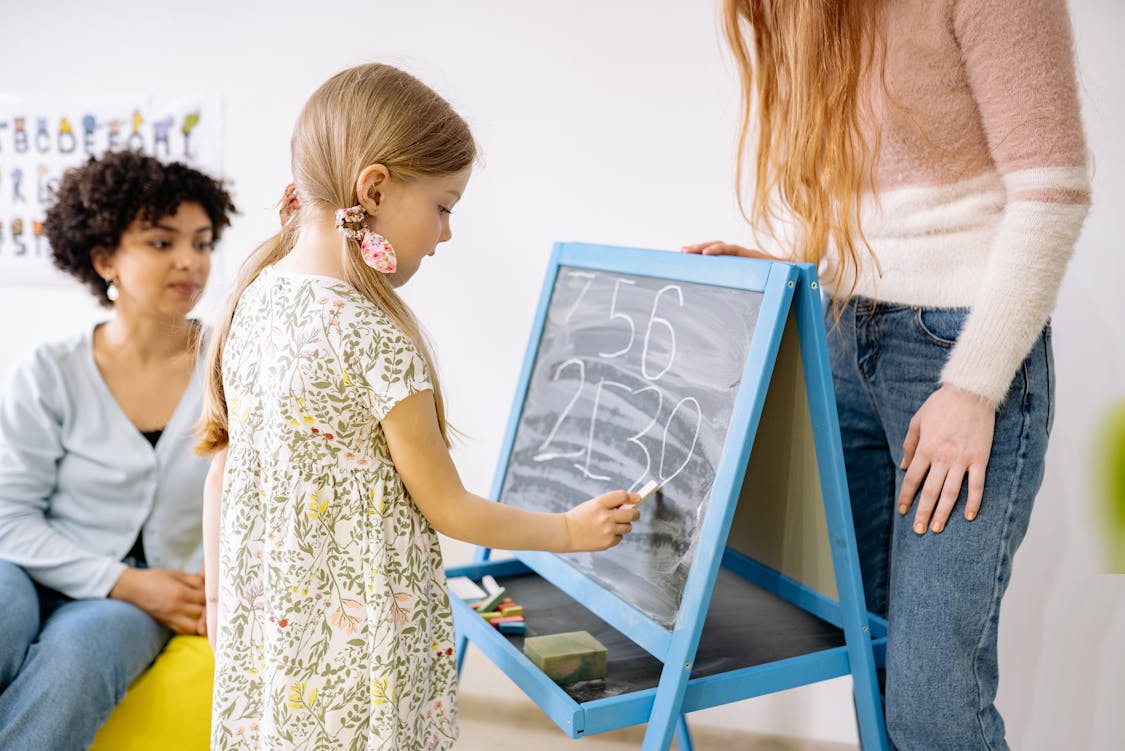
Play settings are mini laboratories where children test plans, handle setbacks and find clever fixes to small problems, sharpening practical thinking under real world pressure that feels manageable.
When two preschoolers want the same toy they may brainstorm ideas such as sharing turns, creating split roles or inventing a new game, which teaches negotiation skills in a concrete, memorable way.
Role play gives kids the chance to rehearse strategies for real life such as asking for help, proposing swaps or offering a quick apology, and those rehearsals build social competence that pays off in school routines.
Adults can nudge the process with open ended questions that invite reflection rather than handing over answers, which strengthens independent reasoning and confidence.
Creative play often invites rule making and gentle rule testing, and children learn to weigh consequences as they test limits and adjust expectations within the group.
Problem solving in groups blends memory, planning and impulse control, skills that prepare children for classroom tasks requiring attention and follow through over time.
Small setbacks like a collapsed block tower provide natural moments to plan more stable builds and to try alternative strategies without a heavy lecture or tension.
Recognizing clever fixes and sincere apologies helps create an atmosphere where experimenting is normal and learning outweighs winning, which encourages kids to try again with less fear of failure.
4. Physical Development And Health
Active social play gets bodies moving in ways that build strength, balance and coordination through chasing, balancing and shared obstacle activities that encourage natural movement variety.
Gross motor play that includes friends adds rhythm and timing as children match steps or pass a ball, and those shared actions refine motor planning and spatial awareness.
Fine motor skills also improve in cooperative tasks such as building elaborate block structures, cutting shapes for a joint collage or dressing up for a role play scene where small hand actions have social goals.
Shifts between quiet and lively moments teach breath control and body awareness, habits that support long term well being and daily regulation.
Group play naturally brings healthy routines into focus when children learn to wash hands together, take snack turns and rest after active sessions as part of the flow of the day.
Cooperative games reduce feelings of isolation and lift mood, which supports emotional health for little ones learning to manage stress and big feelings.
Outdoor, shared play exposes children to varied surfaces and fresh air which adds sensory input that strengthens motor skills and may support immune response through regular, active exposure.
Caregivers who rotate activities and offer safe challenges help children build fitness, confidence and pleasure in movement with friends rather than in solitary practice.
5. Creativity And Cognitive Flexibility
Imaginative play is a playground for creative thinking where children invent scenarios, repurpose objects and test alternative outcomes in a lively social context that rewards novelty. A child care centre that encourages open-ended play gives kids room to experiment and collaborate while learning to negotiate ideas.
Acting out stories, building unusual structures or turning ordinary items into props invites divergent thinking, encouraging children to generate multiple possibilities for a single object or role.
When peers add twists to an idea children learn to adapt and recombine plans, a habit of mind that supports cognitive flexibility and the ability to shift strategies when situations change. Caregiver cues that invite open ended responses scaffold imagination while allowing children to stay in control of their own narratives and choices.
Social play links memory, planning and novelty by having children hold a shared goal while introducing surprises that keep an activity fresh and engaging for everyone involved.
Games that require sequencing, counting or matching tuck gentle math and logic practice into time that feels free and chosen rather than forced, helping concepts stick in memory.
Creative group tasks build attention and executive control when roles are remembered and changes are tracked across short spans of play, and those small demands tune working memory for later classroom learning.
A well loved toy or a shared story can spark a chain of small inventions, and those little sparks add up into richer thinking skills that serve children well as they grow.