The phrase “teeth in a day” used to make experienced dentists wince. For a long stretch it was more slogan than reality, promising a speed the technology underneath couldn’t reliably back up. That gap has closed, and a run of regulatory milestones explains how.
The turn wasn’t one dramatic breakthrough. It was the slow pile-up of cleared materials and digital workflows that let a lab produce a durable, natural-looking prosthesis in hours instead of weeks.
When printed teeth became regulated devices
A useful marker landed when 3D Systems earned FDA 510(k) clearance for a multi-material, one-piece 3D-printed denture. The clearance certified the product as safe and effective for commercial sale, formalizing something labs had been experimenting with on the margins. 
The commercial stakes were not small. Industry estimates cited at the time expected the 3D-printed denture market alone to exceed $2 billion by 2028. That kind of money chases technology that survives a production floor, not laboratory novelties. Around the same window, other manufacturers cleared printable resins for crowns, bridges, and temporaries. Stacked together, they formed a validated toolkit a lab could assemble into a genuine same-day pipeline.
Why the lab is the bottleneck
To see why any of this matters for implant patients, you have to know where the delays actually lived. The surgery to place implants is quick. The wait came afterward, in the back-and-forth with an outside lab building the final teeth.
Impressions got shipped out. Technicians worked from physical models poured in stone. Every adjustment meant another round trip in the mail, another week or two gone. A full-arch case could stretch across appointment after appointment, and each handoff was a fresh chance for scheduling friction and small errors to stack up.
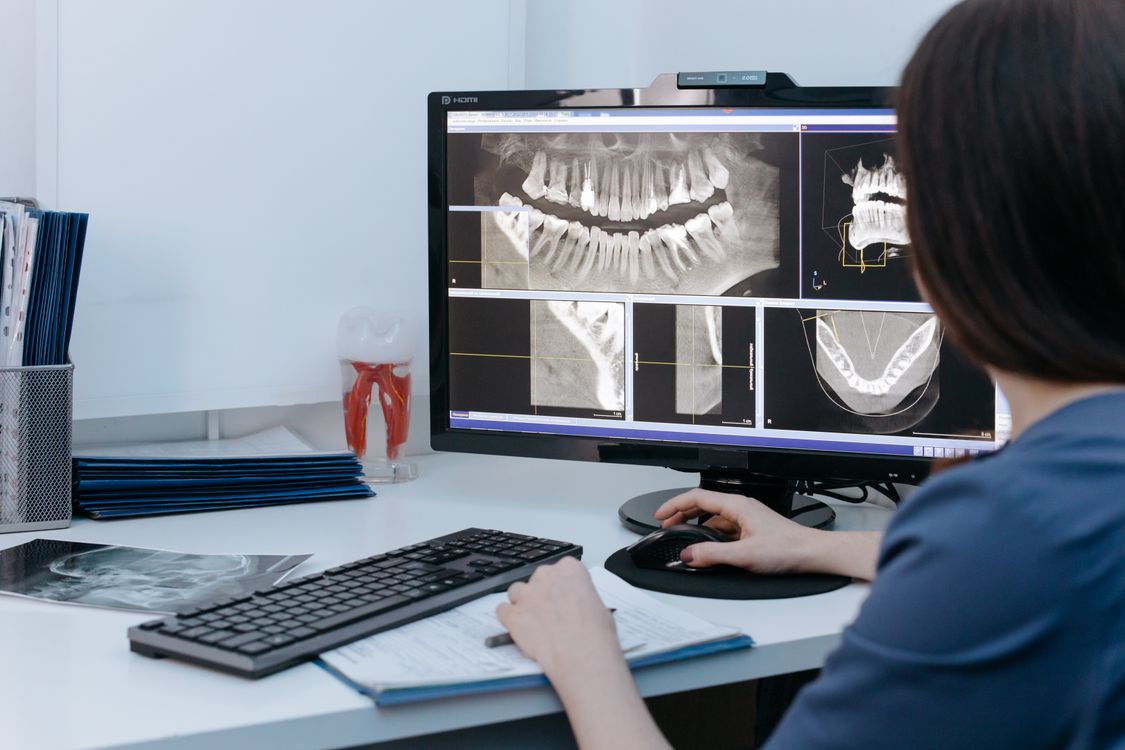
Digital scanning and printing collapse that loop. An intraoral scan becomes a design file, the file drives a printer or mill, and the restoration comes off the machine on site. Put the lab under the same roof as the surgery and the timeline shrinks hard. Guided surgery adds another piece. The same scan that designs the teeth can plan the implant positions in advance, so the surgeon works from a printed guide rather than freehand. That’s the reason some implant-focused clinics sank money into in-house labs and scanners instead of outsourcing.
Owning the fabrication step is what makes a credible same-day promise possible, and the FDA-cleared materials are what keep that fabrication clinically sound rather than a corner cut for speed. “When the lab is down the hall instead of across the state, we can hand a patient a full set of teeth the same day and still adjust the fit before they walk out,” says Dr. Christopher Kimmel of Fixed Dental, a Kyle, TX practice that runs its own in-house lab.
What same-day actually means
Worth being precise here, because the marketing has outrun the reality before. Same-day treatment usually means a patient walks out with a fixed provisional set of teeth on surgery day, not the permanent final restoration.
The final teeth still arrive after a healing stretch, typically a few months, once the implants have fused with the bone in a process called osseointegration. The provisional set holds the space, the bite, and the look in the meantime. But leaving with fixed, functional teeth instead of going toothless for months is a real change in what the patient lives through. Whether a given patient qualifies for that immediate load depends on bone quality and the stability the surgeon achieves during placement. A careful provider decides it case by case rather than promising it to everyone who walks in.
The larger story is that the tools finally match the ambition. Regulatory clearances turned printed dental prosthetics from an experimental curiosity into a standard production method, and the clinics that built their workflows around that shift can now deliver on a promise that used to be mostly hope.