In July 2026, KPBS published a breakdown of what extreme heat actually costs San Diego County. Buried in it is a figure that explains a lot about what is happening in local backyards.
Roughly 194 heat-related injuries and illnesses send county residents to emergency rooms every year, on average.
That number came out of a Shade SD item presented to the city in June. It is not a projection. It is a running annual count. 
The Baseline Moved
A 2024 analysis of the county’s Climate Action Plan found residents now experience six dangerously hot days per year. Between 1950 and 2005 the figure was three.
The county’s own projection puts it at 17 by 2053.
March 2026 offered a preview. Escondido and El Cajon hit 101 on the 19th, Ramona hit 98, Campo hit 100. These were record highs set during what was technically still winter.
Scripps research economist Tom Corringham, who studies the economics of extreme weather, points out that the nighttime side matters as much as the daytime peak. Warmer nights mean less recovery time, which is where the health impact concentrates.
Cooling costs track alongside. Corringham puts typical household electricity at a little under $200 a month, rising 10 to 20% during a heat wave.
And nearly 26% of San Diego County homes have no air conditioning at all, according to recent census data.
Shade Is the Cheapest Intervention Available
Shade SD — formally Solutions for Heat Adaptation and Equity in San Diego — is a state-funded effort led by the Regional Climate Collaborative at the University of San Diego, working with the Heat Hub at Scripps and the cities of San Diego, Chula Vista, and La Mesa.
The project pulled from more than 75 public datasets to build a block-level heat risk map. Part of the challenge was resolution: the county’s 200-plus weather stations are too widely spaced for neighborhood detail, so Scripps scientist Gregory Roberts developed 3D-printed sensors mounted on vehicles and bikes to fill in the gaps.
What the public-sector response converges on is shade. Tree canopy, bus shelter structures, cool pavements. The city’s Climate Action Plan commits to cool pavement installation in parking lots and public right-of-way.
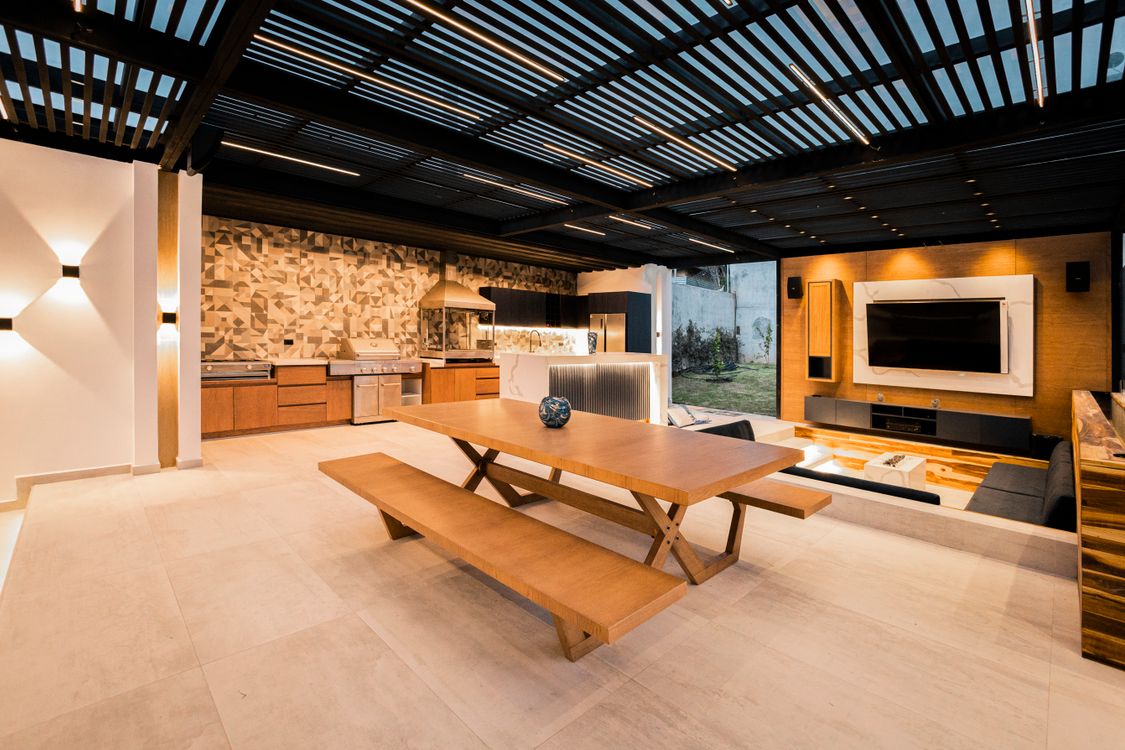
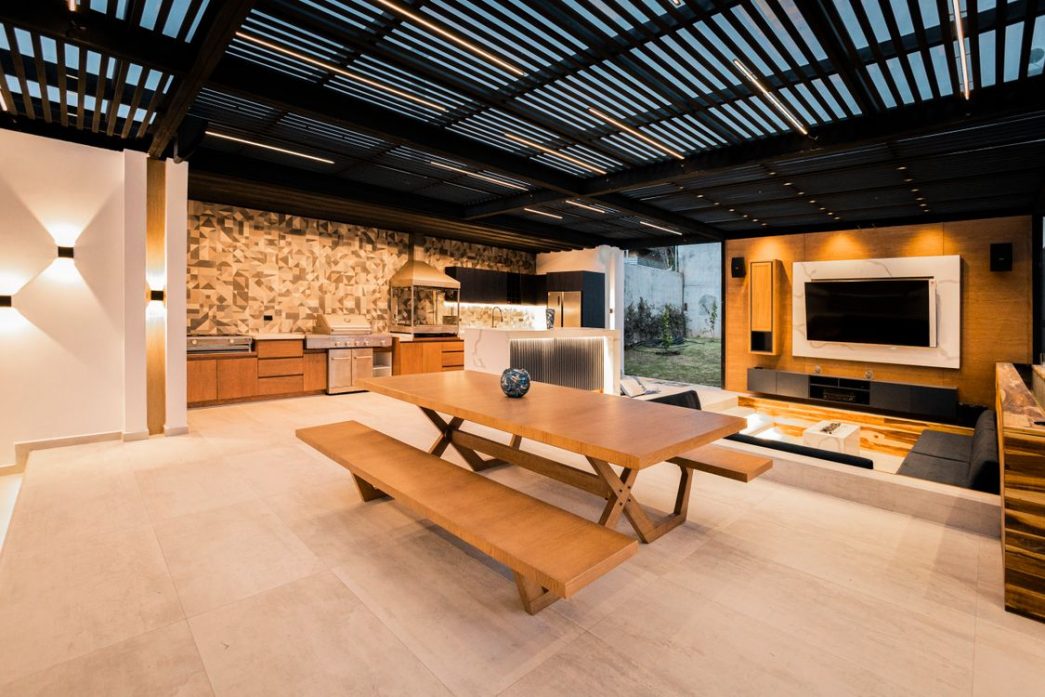
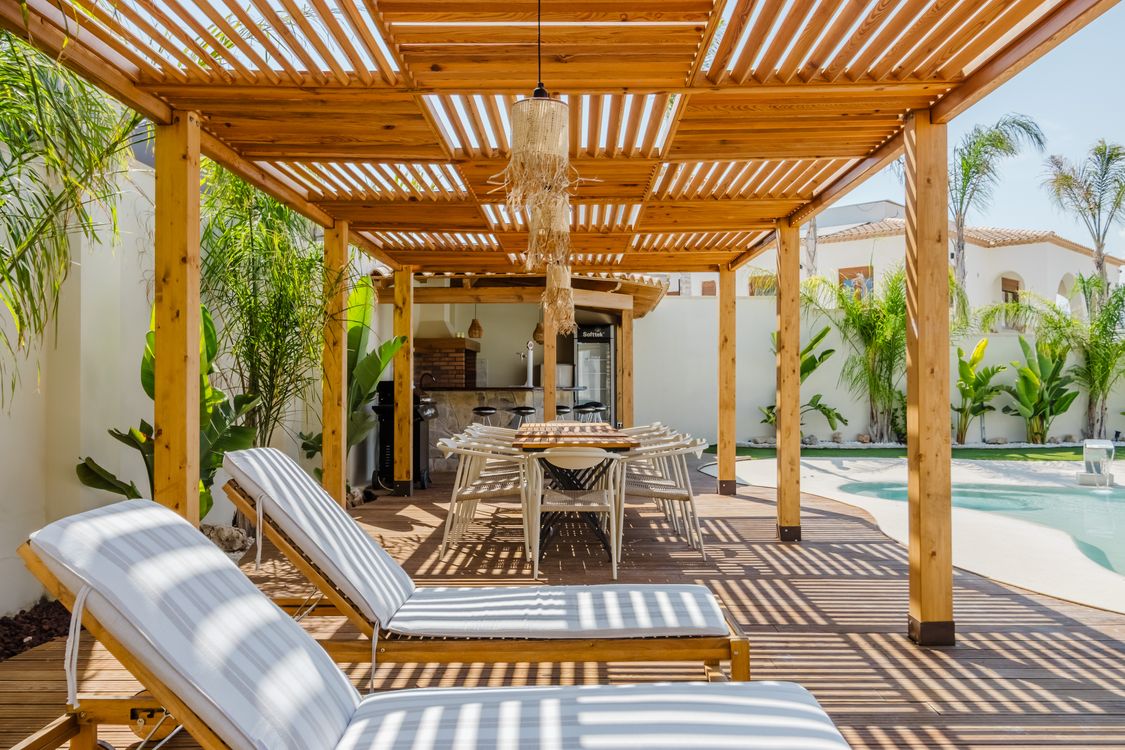
The residential version of that same logic is a patio cover or pergola. It is the one intervention that reduces surface and air temperature in a usable outdoor area without adding to the electric bill.
What Actually Gets Specified Now
The design brief has shifted from decorative to functional, and the details reflect it.
Orientation matters more than it used to. A structure sized for midday sun does little against the western exposure that drives late-afternoon heat, which is when San Diego backyards are hottest.
Solid covers versus slatted pergolas is no longer a purely aesthetic call. Open slats give dappled light and airflow; a solid cover gives genuine temperature reduction underneath and rain protection in winter.
Material choice has moved toward low-maintenance aluminum in inland communities where thermal cycling is harshest, with wood holding its ground closer to the coast.
Surface underneath matters too. A cover over a dark concrete slab still sits above a heat sink. Lighter paving reflects rather than stores, which is the residential version of what the city is doing with cool pavements.
Roughly 220,000 San Diegans work in heat-exposed industries, and the region’s heat exposure is unevenly distributed — inland valleys run considerably hotter than the coast. For anyone in those inland communities, a shaded outdoor room is closer to infrastructure than to landscaping.