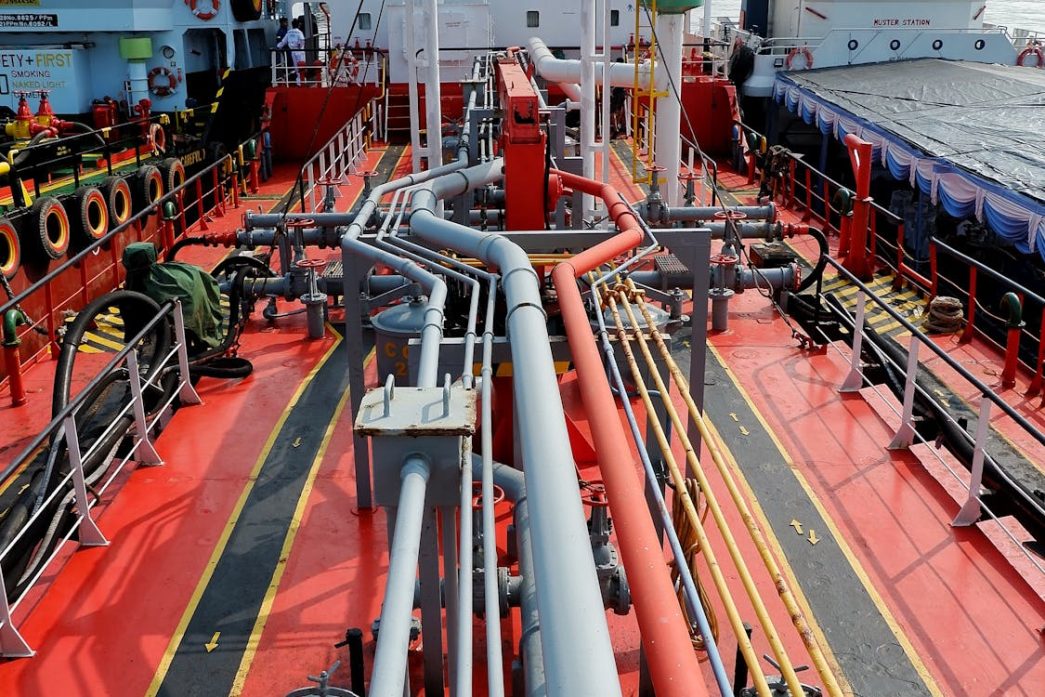
Steel pipes are among the most widely used engineered components in construction, industry and energy systems. They carry fluids, support structures and serve as key elements in machinery from small workshops to vast industrial sites.
Choosing the right type affects safety, service life and cost and it helps to know how each kind is made and where it tends to perform best.
Seamless Steel Pipe
Seamless steel pipe is produced from a solid billet that is heated and pushed or pulled over a mandrel to form a hollow tube. The absence of a welded seam gives these pipes a uniform structure and higher resistance to internal pressure and cyclical loads. 
They find frequent use in high pressure systems such as boilers, heat exchangers and critical oil and gas lines where a flaw at a seam would be hard to accept. Cost per unit tends to be higher, but the trade off is greater reliability in demanding conditions.
Welded Steel Pipe
Welded steel pipe starts as a flat strip or plate that is rolled into a cylinder and joined along a seam by one of several welding processes. Fabrication is faster and material use is often more efficient which translates to lower unit cost for many applications.
These pipes are common in water distribution, structural uses and situations where pressure and temperature demands are moderate. Quality depends on welding technique and post weld treatment, and modern methods yield joints that are highly dependable for routine service.
Electric Resistance Welded Steel Pipe
Electric Resistance Welded pipe is made by forming steel strip into a tube and joining the edges using electrical current to heat the material until it bonds.
The process lends itself to tight dimensional control and good surface finish which makes ERW popular for applications like water mains, scaffolding and general fabrication.
ERW pipe often finds favor where rapid production and consistent sizes matter more than extreme pressure ratings. When properly produced and inspected the seam is quite strong and performance is predictable.
Longitudinal Submerged Arc Welded Steel Pipe
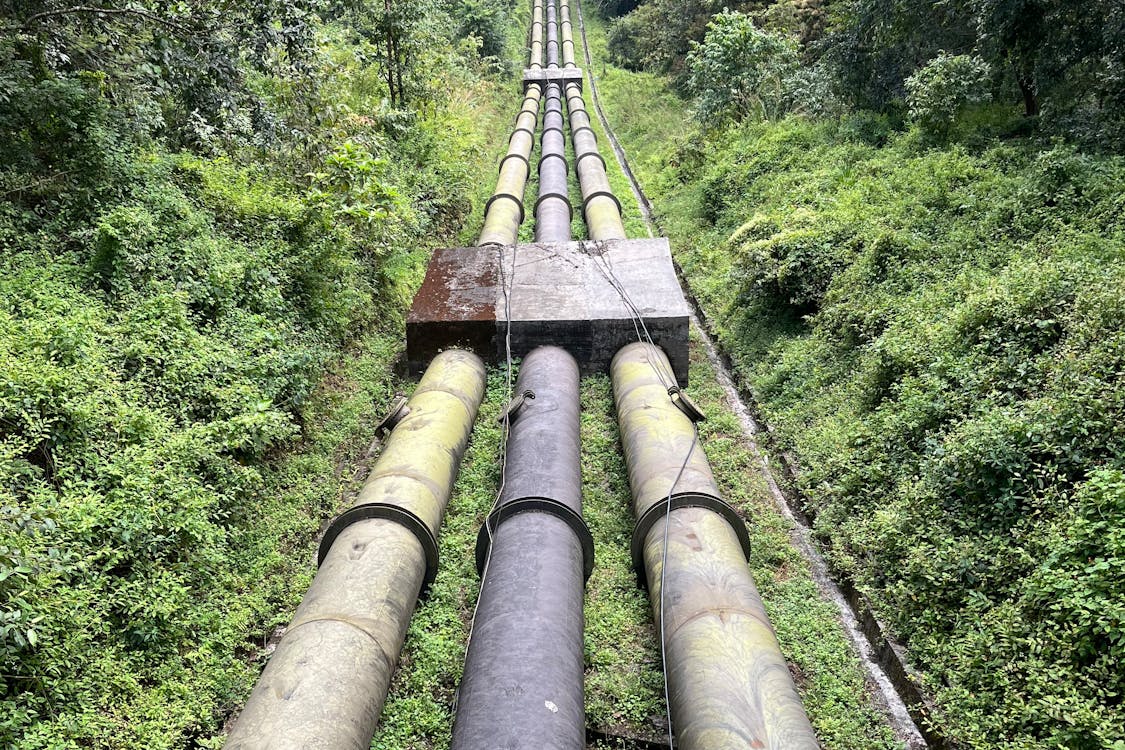
Longitudinal Submerged Arc Welded pipe is formed from plate rolled so that the weld runs lengthwise along the pipe and a submerged arc welding head deposits the joint.
This method is well suited to large diameter projects such as trunk pipelines and structural piles where straight seams and high strength steels are preferred.
The process produces deep weld penetration and reliable metallurgical properties, attributes that help when the pipeline must cross long distances or handle higher pressures. Fabrication mills can tailor wall thickness and grade to match field requirements, keeping weight and cost in balance.
Spiral Submerged Arc Welded Steel Pipe
Spiral Submerged Arc Welded pipe or SSAW pipe is created by spirally winding a steel coil into a tubular shape and welding along the spiral seam as the pipe is formed. The spiral approach allows a single coil to produce a wide range of diameters and wall dimensions while maintaining a continuous production rhythm.
These pipes are common in large diameter, low to medium pressure conveyance such as water mains, drainage and certain pipeline mains where economy and size flexibility are prized. The spiral seam can perform well under bending loads and the fabrication route often lowers total project cost.
Galvanized Steel Pipe
Galvanized steel pipe receives a protective zinc coating that slows corrosion when the pipe faces wet or outdoor exposure. The coating process can be hot dipped or electroplated and it adds life in many plumbing, fencing and exterior structural roles where bare steel would rust.
Galvanized pipe is easy to find and work with, and the surface finish makes painting and further protection straightforward. It is not always chosen for high purity fluid systems, but for general duty use it stands up well and keeps maintenance cycles longer.
Stainless Steel Pipe
Stainless steel pipe is alloyed with chromium and often nickel which creates a corrosion resistant surface film that resists rusting in many environments.
Grades such as 304 and 316 are common and each brings a balance of corrosion resistance, formability and cost that makes them suitable for food processing, chemical handling and marine service.
Fabrication can include welding and cold forming and the finished tubes often require less coating or plating because of their intrinsic surface properties. The material commands a premium but reduces the need for frequent replacement in corrosive service.
Carbon Steel Pipe
Carbon steel pipe covers a wide family where carbon content controls strength, hardness and weldability and mills produce grades tuned to many uses. It is the go to material for pipelines, structural members and many mechanical systems where toughness and load bearing matter more than corrosion resistance.
Surface protection such as painting or galvanizing is common when the pipe will see weather or aggressive environments. The material behaves predictably under heat and load, and craftsmen have long experience welding and forming it into a host of configurations.
Alloy Steel Pipe
Alloy steel pipe contains deliberate additions such as chromium, molybdenum or vanadium that change mechanical and thermal properties for specialized service.
These additions improve fatigue resistance, creep life at elevated temperature and resistance to wear so the pipes suit power plants, high temperature process lines and heavy duty mechanical systems.
Fabrication often requires specific heat treatment or welding procedures but the performance gains justify those steps when operating conditions are severe. Engineers select particular alloy mixes to match pressure, temperature and corrosion challenges and the result is a component tuned to task.
Precision And Mechanical Steel Pipe
Precision and mechanical steel pipe are produced by cold drawing or cold finishing and are held to tight dimensional tolerances and smooth surface requirements. These tubes are used in hydraulic cylinders, instrument tubing, automotive parts and machinery where fit and finish affect function and sealing performance.
Because of the controlled manufacture the material often needs less secondary machining and leads to faster assembly in workshops and factories.
The nature of production gives tight roundness, consistent wall thickness and predictable mechanical characteristics that make these pipes an easy pick when precision matters.