
For decades, gym culture has operated on a simple doctrine: finish your last set, race to the locker room, and consume protein within 30 minutes or watch your gains evaporate. The supplement industry built an empire on this urgency, selling convenience and anxiety in equal measure.
But a comprehensive meta-analysis examining 23 controlled studies found something uncomfortable for the shake industry: when total daily protein intake was held constant, the supposed benefits of immediate post-workout consumption largely disappeared.
How the Anabolic Window Myth Was Born
The concept of a narrow “anabolic window” emerged from early research in the 1980s and 1990s examining acute metabolic and hormonal responses to post-exercise feeding. Those studies documented real physiological changes – elevated muscle protein synthesis, insulin response, reduced protein breakdown – but they measured what happened in the hours immediately following nutrient consumption, not long-term muscle growth outcomes. 
The critical distinction got lost in translation. Yes, resistance training increases muscle protein synthesis. Yes, protein consumption further elevates that synthesis. But the assumption that this elevation had to occur within a 30-minute window to matter for actual muscle growth rested on limited evidence. What those early studies didn’t control for was total daily protein intake or the timing of pre-workout meals – variables that turned out to matter far more than anyone initially realized.
The Window Is Hours, Not Minutes
Research examining the evidence against immediate post-workout consumption has demonstrated that muscle protein synthesis remains elevated for 24 to 48 hours after resistance training, not 30 minutes. The body stays in a heightened muscle-building state for far longer than the traditional window allowed. Protein consumed anywhere within this extended recovery period can effectively support muscle repair and growth.
The 2026 understanding is that the “anabolic window” does exist, but it’s measured in hours, not minutes. Multiple analyses now place it at 4 to 6 hours post-exercise, with some evidence suggesting benefits extending even longer. If you consumed a protein-containing meal 3 to 4 hours before training, amino acids from that meal are still circulating, still being utilized for muscle protein synthesis during and after your workout. The rush to consume protein immediately afterward becomes physiologically unnecessary.
What Actually Matters: Total Daily Protein
This has massive implications for the supplement industry, which has marketed post-workout protein products on the premise of immediacy. The urgency was the value proposition – not just protein, but protein right now, when your muscles supposedly need it most. Remove the urgency, and you’re left selling expensive protein in convenient packaging, which is a much harder sell when compared to whole food alternatives that cost less per gram.
The updated position from the International Society of Sports Nutrition confirms what the research has been indicating: total daily protein intake is the strongest predictor of muscle hypertrophy, not exact timing. For individuals focused on muscle growth, the general recommendation remains 1.6 to 2.2 grams of protein per kilogram of body weight daily, distributed across 3 to 5 meals. Getting adequate total protein matters. Spreading it relatively evenly throughout the day matters. Racing to consume it within 30 minutes of finishing a workout doesn’t.
When Timing Actually Does Matter
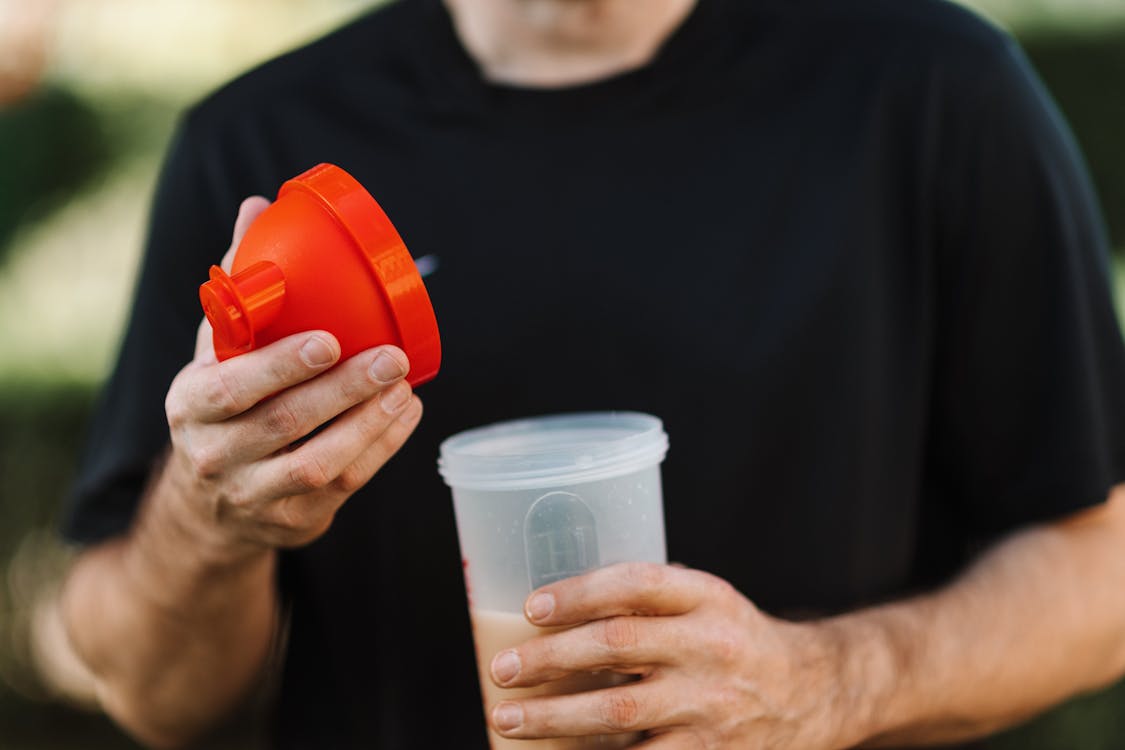
But the nuance gets complicated, which is part of why the myth persisted. Timing does matter in specific scenarios. If you train first thing in the morning in a fasted state – no pre-workout meal, no amino acids already circulating – then post-workout protein consumption becomes more important. Your body has no recent nutrient intake to draw from, so providing protein relatively soon after training makes a measurable difference.
Similarly, athletes training multiple times per day or engaged in very high-volume training benefit from more strategic timing. When glycogen stores are significantly depleted and recovery windows between sessions are short, faster nutrient replenishment supports better performance in the subsequent session. For this population, immediate post-workout nutrition has practical value unrelated to the anabolic window myth.
Individual Variability Complicates Simple Rules
The research also reveals that individual variability complicates simple prescriptions. Some people show greater sensitivity to nutrient timing than others based on training status, age, baseline protein intake, and genetic factors. For a novice lifter consuming adequate total daily protein, timing makes essentially no difference. For an advanced athlete operating at the margins of physiological adaptation, small timing optimizations might matter – but even then, they’re overwhelmed by total intake if that’s insufficient.
Gym Culture Resists the Evidence
What’s particularly striking is how resistant gym culture has been to updating its practices despite the evidence. Walk into any commercial gym after 6 PM and you’ll still see people frantically mixing shakes in the locker room, convinced they’re in a race against biology. The urgency has cultural staying power independent of scientific support, partly because it feels intuitive – of course the moment right after training is special – and partly because the supplement industry has every incentive to keep the myth alive.
Professional sports teams and elite training programs have quietly shifted their nutrition protocols to align with the updated science. Total daily protein gets meticulous attention. Distribution across meals is optimized. But the immediate post-workout shake? It’s convenience and preference, not necessity. If an athlete wants one, fine. If they’d rather wait and have a whole food meal an hour later, equally fine.
The Liberating Truth
The practical takeaway for the 2026 athlete is liberating: you don’t need to structure your entire schedule around consuming protein within minutes of finishing a workout. If it’s convenient and you enjoy a post-workout shake, the protein will be utilized. If you’d rather shower first, commute home, and have a proper meal, you’re not sacrificing gains. If you had protein 2 to 3 hours before training, you’re already covering the window without additional intervention.
What actually matters – and what’s much less sexy to market – is consistency. Hitting your total daily protein target, day after day, week after week, across months and years. Spreading that protein across multiple meals so you’re regularly stimulating muscle protein synthesis throughout the day. Training with progressive overload. Recovering adequately. These fundamentals determine outcomes far more than whether you consumed 25 grams of protein at minute 28 versus minute 62 post-workout.
The protein timing myth persists because it offers a simple rule in a domain where people desperately want simple rules. But muscle growth is a long-term adaptive process, not a minute-by-minute negotiation with biology. The window is open. You don’t need to sprint to get through it.